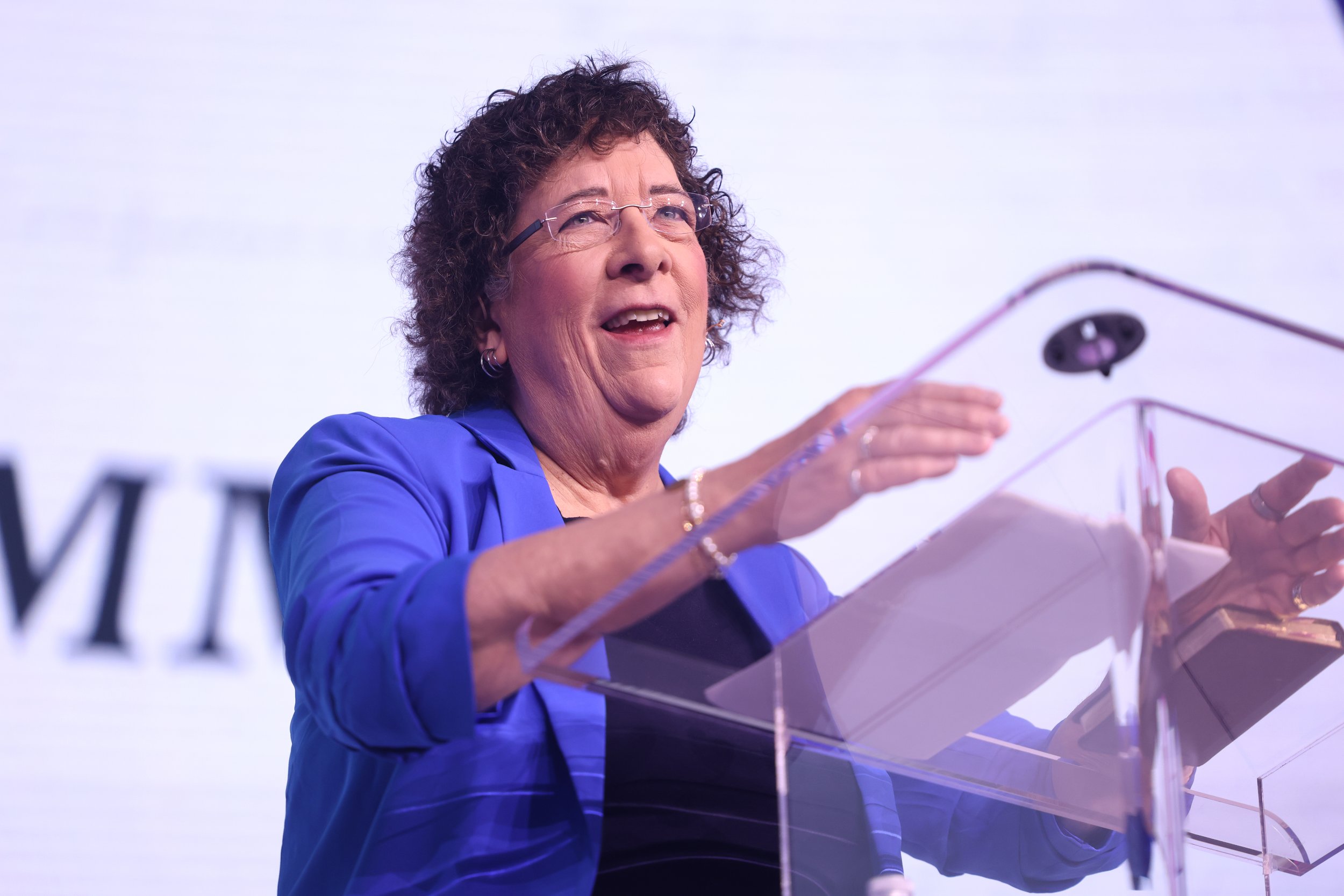
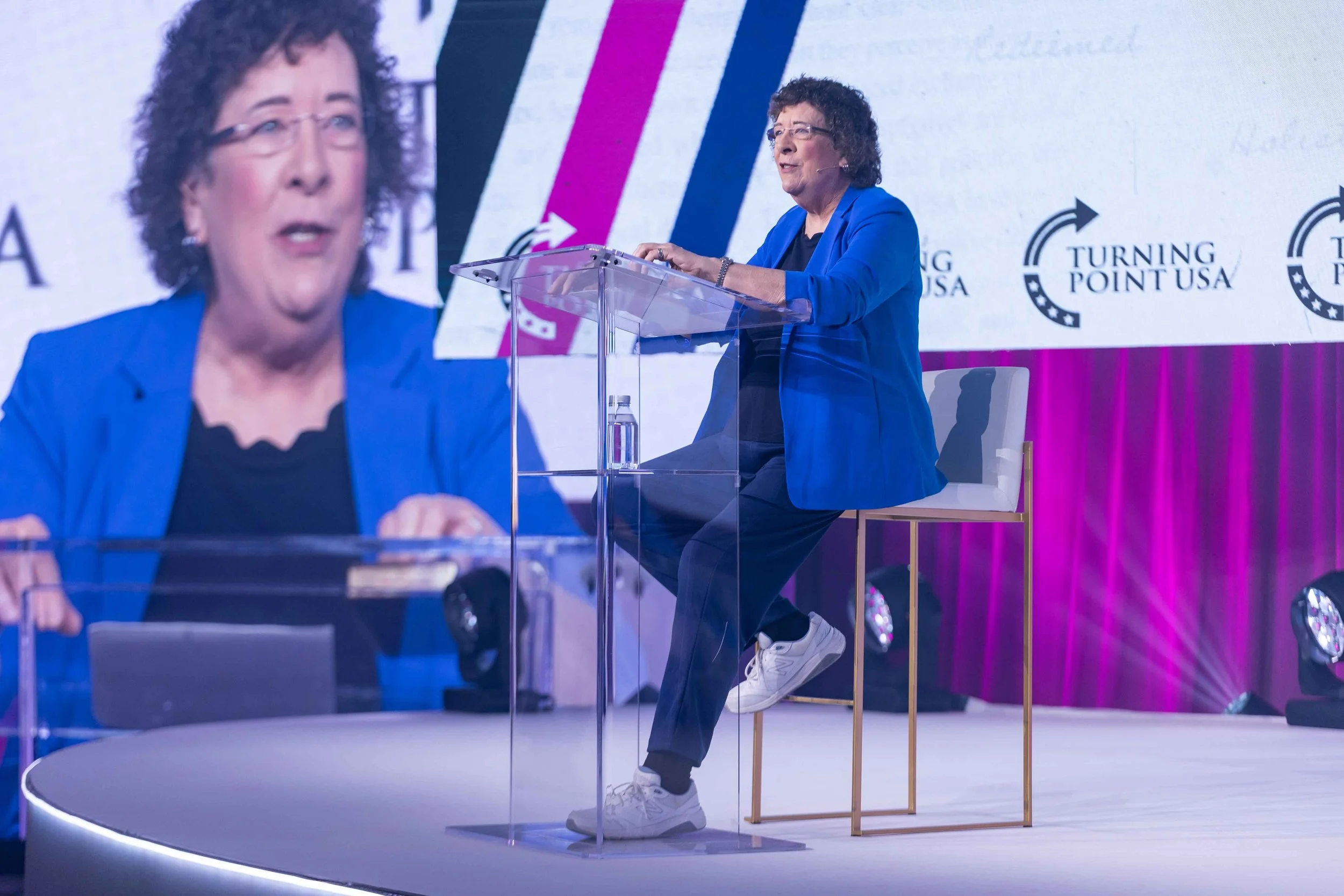
I recently remembered something Dr. Kathy said while we were filming one of our new short courses. She was sitting under the lights; I was behind the camera, and just before we started, she looked straight ahead and said, “I’m not exactly sure what I’ll say, but let’s do this.” What struck me was how calm she sounded as she admitted uncertainty. She had prepared; she knew the key ideas; she had notes; she had decades of experience, but she had not scripted every word or decided exactly how the next several minutes would unfold. A few minutes later, she had said plenty; it all made sense, and the uncertainty had not stopped her from moving forward.
When I asked her about it, she explained that experience has taught her she can be prepared without controlling every detail. She also talked about yielding to the Holy Spirit, trusting that she can enter a moment ready without needing every sentence planned in advance. That is a very different posture from needing certainty before taking action. It does not say, “I know exactly what is going to happen.” It says, “I know enough about who is with me to move forward.” That distinction is becoming increasingly important for our kids.
Not Knowing Has Become Harder for Young People
The research we discussed looked at something psychologists call intolerance of uncertainty. In simple terms, it is the tendency to experience not knowing what happens next as unusually stressful or even threatening. The analysis covered more than thirty five thousand college students across the United States and Canada and found that scores related to intolerance of uncertainty increased over time, with the rate of increase accelerating after 2012. The researchers did not establish a single cause, and we should be careful not to pretend one factor explains everything. Smartphones, social media, academic pressure, loneliness, economic instability, and the pandemic have all been suggested as possibilities. What we do know is that uncertainty itself is getting harder for many young people to carry.
Parents see smaller versions of this all the time. “Are you sure?” “What if I don’t make the team?” “What if nobody sits with me?” “What if the teacher calls on me?” “What if you’re late picking me up?” One question is normal. Five versions of the same question can become a search for a guarantee we cannot actually give. We may answer because we want the child to feel better, but repeated reassurance can eventually teach them that feeling safe depends on getting another answer from us.
Security and Certainty Are Not the Same Thing
This is where Dr. Kathy’s teaching on the Five Core Needs becomes especially helpful. Security answers the question, “Who can I trust?” It does not answer, “Can I know exactly what is going to happen?” Those are very different questions. A secure child can still feel nervous about tomorrow because security does not eliminate uncertainty. It gives the child somewhere solid to stand while uncertainty remains.
That was what I heard in Dr. Kathy’s story about speaking. She did not know exactly how the session would unfold, but she trusted the preparation and ultimately the Holy Spirit. The unknown was real, but it was not empty. Our children need a similar kind of foundation. They may not know whether the tryout goes well or whether the presentation feels awkward. But they can know who is with them and what kind of person they want to be while they wait.
Kids Need Their Parents’ Voices Inside Their Heads
Dr. Kathy said something I love: she wants children to eventually hear their parents’ voices in their heads. She did not mean children should remain dependent on Mom and Dad forever. She meant that good parenting should become internalized wisdom. A child walks into a situation and already knows what Dad would say. They face a choice and remember Mom’s standard. The parent is not physically present, but the value has become portable.
She gave the example of sisters trying on clothes and one saying to the other, “Dad would never let us wear that.” They knew the family standard well enough to decide without a parent standing in the dressing room. That is a beautiful picture of security becoming character. The child is no longer obeying only because somebody might catch them. They know what is wise and can choose it when the burden is theirs to carry.
Eventually, We Want Them to Recognize God’s Voice Too
Dr. Kathy pushed the point beyond parental wisdom. Children ultimately need to know God’s Word well enough to recognize truth and distinguish the voice of the Holy Spirit from voices that pull them somewhere else. That requires more than telling children, “Just pray about it.” They need Scripture in them. They need years of hearing truth discussed at home, taught at church, applied to real decisions, and connected to the life they are actually living.
The long term goal is not a teenager who always asks, “Dad, what should I do?” It is a teenager who increasingly knows how to ask, “What is true? What does Scripture say?” Parents remain important, but we become guides toward a deeper dependence. That is spiritual security. It allows a child to walk into an uncertain situation without believing they are walking alone.
Constant Reassurance Can Accidentally Make Anxiety Stronger
One of the most challenging parts of this conversation was Dr. Kathy’s explanation of repeated reassurance. If the child’s confidence comes primarily from Mom saying, “I promise everything is going to be fine,” then the child may need Mom to keep saying it. The reassurance works in the short term because anxiety goes down. But the child may not learn how to evaluate reality, remember past experiences, recognize truth, or tolerate the uncomfortable feeling long enough for it to pass.
That puts parents in a difficult position because reassurance feels loving. Our child is afraid, and we know the sentence that will calm them. But there is a difference between presence and guarantee. “I’m here with you” is something we can honestly promise. “Nothing bad will happen” usually is not. We want kids to learn that our presence can remain steady even when outcomes are not.
Point Out the Times Life Did What It Was Supposed to Do
Dr. Kathy shared a simple babysitting example that illustrates how children build tolerance for uncertainty through experience. A child might repeatedly ask whether Mom and Dad are really coming back after a date night. The parents reassure them, leave, and then return as promised. The next morning, they can actually point out what happened: “See? We came back.” That matters because the child is slowly collecting evidence.
Parents can do this in all kinds of situations. “You were nervous about the first day, and you made it through.” “You weren’t sure the coach would explain the drill, but he did.” “You thought you couldn’t handle staying overnight, and now you know you can.” The goal is not to turn every moment into a lesson. It is to help children notice reality so their confidence is increasingly built on remembered experience rather than endless prediction.
“This Is Hard” Can Be More Helpful Than “It’ll Be Fine”
I brought up something Dr. Kathy teaches in Resilient Kids: supported challenge. Sometimes children say, “School is hard,” and adults instinctively try to erase the feeling. “It’s not that bad.” “You’ve got this.” Those sentences may be encouraging, but sometimes the more truthful answer is simply, “Yeah, I know. This is hard.”
There is relief in having somebody acknowledge reality. A hard thing does not become easy because Dad used an encouraging tone. The child may still have to do the presentation, wait for the result, face the conflict, or finish the assignment. We can stay beside them without pretending the challenge is smaller than it feels. “This is hard, and I’m here” is often stronger than “This will be easy.”
A Hard Day Does Not Have to Become a Bad Day
Dr. Kathy made an important distinction later in the conversation: kids are going to experience anxious feelings, sadness, trials, difficult relationships, academic pressure, and hard days. Those experiences do not automatically mean something is wrong with the child or the parent. Feeling anxious is not identical to having an anxiety disorder. Feeling sad is not identical to depression. Experiencing a hard day does not mean the entire day was bad.
That distinction helps children avoid catastrophizing normal struggle. They can say, “Today was really difficult” without concluding, “I cannot handle life.” They can be nervous before something and still do it. Emotional maturity includes the ability to hold more than one reality at once.
Parents Can Accidentally Teach Kids That Struggle Is Failure
Dr. Kathy also challenged parents to look inward when children seem especially afraid of risk or uncertainty. Sometimes children have not had enough opportunities to succeed at difficult things. Sometimes our first response to an 88 is, “Could you have done better?” or “What did everybody else get?” The child learns from those reactions. They may begin believing that anything short of certainty and success is dangerous.
Then we wonder why they hesitate. We wonder why they ask the same question repeatedly or refuse to try something they might fail at. But if our reaction to imperfection has consistently felt heavy, avoidance makes sense. Parents can help by being clear about what success actually means. Sometimes an 88 after hard work is growth worth celebrating.
Kids Were Not Given to Us to Perform for Us
This conversation connected back to something Dr. Kathy and I have discussed often: children should not be expected to perform so parents can feel successful. When our own worth gets wrapped around our kids’ achievements, uncertainty becomes harder for everybody. We need the child to make the team because we want the reassurance. We need the grade because it makes us feel like our parenting is working. We need the performance to go well because their success becomes evidence about us.
That pressure is unfair to the child. It also quietly makes risk dangerous. If failure threatens Mom or Dad emotionally, the child may prefer not to try. Resilience requires enough relational safety that failure can happen without questioning belonging. Children need to know their growth matters more than their ability to protect our image.
Struggle Is Part of How Character Becomes Strong
Dr. Kathy said that if we avoid hard things and keep life easy, we can unintentionally raise fragile children who become fearful when asked to go beyond what feels comfortable. Technology can reinforce that expectation because so many inconveniences disappear with a click. We no longer have to remember a phone number. GPS tells us where to go. Spellcheck catches the mistake. Search gives us an answer in seconds.
Those tools are helpful, and I am certainly not volunteering to give up GPS. But children whose brains and character are still developing need experiences that require persistence. Scripture repeatedly treats struggle as a place where endurance, character, and hope can grow. We do not need to create unnecessary suffering. We do need to stop assuming that difficulty itself is a problem.
Supported Challenge Means Staying Close Without Taking Over
There is a middle ground between abandoning a child to their anxiety and removing every uncertain situation. That middle ground is supported challenge. The parent stays present but does not automatically take the task away. We can help the child prepare, talk through possibilities, practice a conversation, or remind them of something true. Then we let them step into the situation.
That is different from repeatedly answering every “What if?” until no uncertainty remains. In reality, uncertainty never completely disappears. Supported challenge teaches, “You do not have to know everything before you move.” That is an adult skill, a resilience skill, and a spiritual skill.
Exodus 16 Gives Us a Picture of Daily Security
The biblical story that came to mind was Israel receiving manna in Exodus 16. God fed His people in the wilderness with something they did not even know how to identify at first. They called it manna, essentially asking, “What is it?” Then God gave them an unusual instruction: gather what you need for today. Do not stockpile tomorrow’s provision.
When some of them tried to keep extra, it spoiled. God was not merely solving a food problem. He was teaching dependence. Every morning Israel had to wake up without a pantry full of guarantees and discover again that God had provided what they needed for that day. Uncertainty remained, but so did faithfulness.
God Did Not Give Israel a Year’s Supply
That detail matters because God certainly could have provided differently. He could have given them months of food at once and removed the daily question. Instead, the pattern itself became formative. They gathered enough and ate. Then morning came, and they learned again that God had not forgotten them.
Jesus echoes that rhythm in the Lord’s Prayer: “Give us this day our daily bread.” We often want yearly bread. We want the guarantee that everything will work out in school, relationships, finances, health, college, career, and whatever comes next. God often gives enough grace for today.
Anxiety Asks One Question, but God Often Answers Another
Anxiety wants to know, “How can I be sure about tomorrow?” Scripture does not always answer that question the way we want. Instead, God repeatedly answers, “You can trust Me today.” That connects directly to Dr. Kathy’s definition of security. Who can I trust?
That is a more durable answer than certainty because certainty is rarely available. We cannot promise children that friendships will last, teams will choose them, people will be kind, or every plan will work. We can teach them that God remains faithful when the plan changes. That is the kind of truth a child can carry into almost any future.
Let Kids Practice Saying “I Don’t Know Yet”
There is freedom in learning that “I don’t know yet” is not an emergency. I do not know whether I will make the team. I do not know how the conversation will go. I do not know whether this class will be difficult. I do not know what college I will attend. Those sentences can feel threatening when a child believes uncertainty means danger.
Parents can normalize them. “You don’t know yet, and that is okay.” Then we move to what we can know. What is the next wise step? What truth remains true? Who can help? What can you prepare? What responsibility belongs to you today?
Security Gives Kids Somewhere to Stand While They Wait
The goal is not to raise children who never feel nervous. The goal is to raise children who do not need nervousness to disappear before they can move forward. Security gives them a foundation from which to wait, decide, risk, and try. That foundation begins with trustworthy parents and grows toward trust in God. Over time, the child starts hearing wisdom internally instead of needing it supplied every minute.
That is what maturity looks like. The parent remains available without becoming the only source of calm. The child knows, “I can ask for help, but I am also becoming capable of thinking this through.” Eventually they learn that security does not mean controlling the future. It means knowing who holds them in it.
Building Tolerance for Uncertainty Through the 8 Great Smarts
Word Smart: Give kids language like “I don’t know yet,” “This is hard,” and “What do I know is true?” and let them talk through worries without answering every one immediately.
Logic Smart: Help them distinguish possibility from probability, identify cause and effect, and think through the next wise step instead of trying to solve the entire future.
Picture Smart: Let them visualize multiple possible outcomes and practice imagining themselves responding wisely rather than only picturing disaster.
Music Smart: Use songs, hymns, worship music, or Scripture set to music to help truth become memorable when uncertainty feels loud.
Body Smart: Practice the hard thing, walk while talking, rehearse the presentation, visit the unfamiliar place, or give the body experience proving that the situation is survivable.
Nature Smart: Use changing weather, seasons, growth, and patterns in creation to remind kids that change and uncertainty are normal parts of life.
People Smart: Help them identify trustworthy people they can seek for wisdom without making reassurance from others the only thing that calms them.
Self Smart: Encourage quiet reflection, prayer, journaling, and noticing what uncertainty feels like internally without immediately trying to eliminate it.
However your child is smart, they are going to face things they cannot predict or control. We cannot parent them into a world where every outcome is guaranteed, and trying to do so may leave them more frightened when life refuses to cooperate. We can give them something better. We can become trustworthy people, let them practice hard things with support, help them recognize truth, and point them toward a faithful God. Eventually, we want them to be able to say, “I don’t know exactly what happens next, but I know who I trust.” That kind of security can carry a child much farther than certainty ever could.